Tiger Rug

Welcome to Arts & Crafts Homes Online

OUR MISSION is to offer expert advice and perspective for those building, renovating, or furnishing a home in the Arts and Crafts spirit. This quarterly covers contemporary practitioners as well as the historical antecedents of the continuing Arts and Crafts movement.

From the category archives:

Interiors

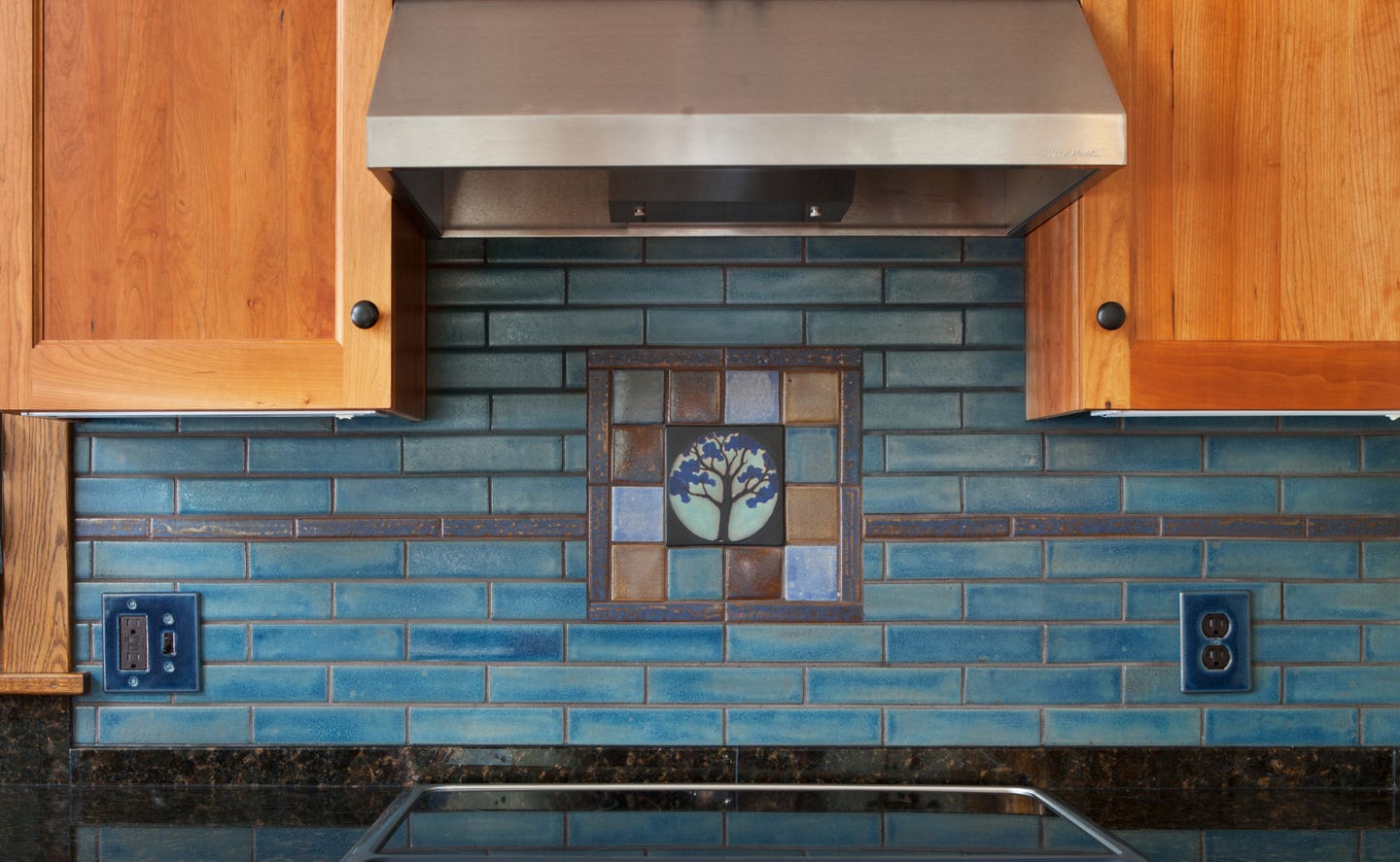
Tile is used not just in the kitchen and bathroom but also for fireplace surrounds, entries—and floors! Tile is a durable flooring that is also artistic, both in its intrinsic body and color and because of the patterns in which it can be laid.

Tile is used not just in the kitchen and bathroom but also for fireplace surrounds, entries—and floors! Tile is a durable flooring that is also artistic, both in its intrinsic body and color and because of the patterns in which it can be laid.

Manufactured ceramic tile is available and appropriate in hexagons, octagons, oblongs, diamonds, and rhomboids, with a limitless range of patterns. Mesh-mounted basketweave and herringbone tiles update early 20th century patterns in a host of colors. Mosaics, too, can be laid for different field effects and to create borders.

Photo by Alan Weintraub

Photo by Alan Weintraub

Geometric and encaustic tiles, favorites during Britain’s Aesthetic and early Arts & Crafts movements, are durable floor tiles with a matte finish; variously shaped and colored, they can be designed into kaleidoscopic patterns. The traditional method of building up the patterns by pouring different-color slips into molds meant that colors don’t fade as the pattern wears down. Such traditional tiles (with straight edges meant to be laid with very narrow grout lines) are still available, as are “modern” encaustics that cost less.

Photo by Eric Roth

Photo by Eric Roth

The Arts & Crafts period saw an explosion of tile making, on the East Coast and West. Many companies today have revived the craft. And some of the originals are still in business: Henry Mercer’s Moravian Tileworks in Doylestown, Penn., now operated as a non-profit, still turns out the unique, embossed and decorated tiles that defined a style by themselves.

Stone has been an enduring medium for floors since, well, the Stone Age. Today’s floors are more likely to be beautifully cut slate and limestone or granite with some sort of manmade relief—evidence of clefts and pick marks, for example. Concrete floors were used during the later Arts & Crafts period, by Frank Lloyd Wright and others. Today concrete, as itself or mimicking stone or tile, is a popular alternative. Do consider stone and concrete flooring as an appropriate natural material for back halls and mudrooms, foyers, sunrooms, and even kitchens and family rooms.

{ 1 comment }

The Floor is a Key to Style!

by Arts & Crafts Editor

Bungalow floors and more: The standard for formal rooms public and private, wood floors suggest durability even as they convey understated beauty and depth. Slate and limestone (and now stained concrete floors) create drama in a foyer or bath. For practical durability and virtually limitless color choices, you can’t beat a resilient floor in the kitchen or family room. For Arts & Crafts homes built at the end of the Victorian period and into the 20th century, all of these alternatives are appropriate.

Click to continue →

Ojai Time

by Arts & Crafts Editor
Thumbnail image for Ojai Time

Long-time collectors of vintage American pottery and Navajo art found the right house for their collections. It was built as a winter haven for industrialist Edward Drummon LIbbey (as in Libbey Owens-Corning). Bill and Kathy Couturie restored it in the 1990s.

Click to continue →

Metalworks in the Design of the Arts & Crafts Home

by Arts & Crafts Editor

Brian Coleman describes the resurgence of fine work bringing us fireplace tools, stove hoods, garden gates, and metal art tiles.

Click to continue →

Arts & Crafts Metalwork

by Arts & Crafts Editor
Thumbnail image for Arts & Crafts Metalwork

The American movement is so heavily identified with wood: shingled bungalows, Mission oak, wainscots and beams. And as for the revival, interpretation of the woodwork of Greene and Greene is a movement all its own.

Click to continue →

3 Arts & Crafts Kitchens

by Arts & Crafts Editor

Fabulous revival kitchens appeared in three different features in our Fall 2009 issue of Arts& Crafts Homes. Here’s a look at these projects.

Click to continue →

This is True Arts and Crafts

by Arts & Crafts Editor
Patricia Poore, Editor of Arts and Crafts Homes Magazine

It’s been years since I went antiquing in Essex. That’s the old ship-building town next to Gloucester, which is incidentally famous for a cluster of antiques stores…

Click to continue →

Allow Me Hyperbole…

by Arts & Crafts Editor
Patricia Poore, Editor of Arts and Crafts Homes Magazine

Television on, one night last week I fell asleep early, only to wake up in the impossible humidity of two a.m. Very quietly, the TV was telling me about the secrets of the Parthenon.

Click to continue →

From the Mind of Gustav Stickley

by Arts & Crafts Editor
From the Mind of Gustav Stickley

At Crab Tree Farm, interiors like those in the Ellis Bungalow are filled with treasures, and designed based on suggestions from Stickley’s The Craftsman magazine.

Click to continue →

Inside a Colonial Revival!

by Arts & Crafts Editor
arts and crafts colonial revival

This gambrel-roofed brick Georgian house in New Hampshire was built in 1901.

Click to continue →

Doors Closed and Opened

by Arts & Crafts Editor
Thumbnail image for Doors Closed and Opened

For years—decades, in fact—I operated as an independent publisher, because no one told me how crazy that was…

Click to continue →

Happy 100th, Gamble House!

by Arts & Crafts Editor
Thumbnail image for Happy 100th, Gamble House!

Pasadena Heritage Craftsman Weekend, October 17th–19th, join in celebrating the centennial of the Gamble House, an Arts & Crafts icon by Charles and Henry Greene.

Click to continue →

Defining the Arts & Crafts Movement

by Arts & Crafts Editor
Thumbnail image for Defining the Arts & Crafts Movement

The American version of Arts & Crafts was simpler than the European movements, emphasizing wood tones and earthy materials and colors.

Click to continue →

A Short History of the Bungalow

by Arts & Crafts Editor
Thumbnail image for A Short History of the Bungalow

America had a long love affair with the Bungalow-for thirty years a torrid one-and the old flame has been rekindled.

Click to continue →

Defining the Arts & Crafts Revival

by Arts & Crafts Editor
Thumbnail image for Defining the Arts & Crafts Revival

The artist-craftsman is celebrated today after decades during which handicraft was devalued.

Click to continue →

Architect Gerald Morosco on the Revival

by Arts & Crafts Editor
gerald morosco, architect

If you’ve attended the annual Grove Park Inn Arts and Crafts Conference in Asheville, North Carolina, chances are you’ve run into Jerry Morosco.

Click to continue →